 RoamingRaju
In the spring of 2026, we visited Brazil. Let me start by saying this is a soccer-crazy country. Everywhere you go, people are talking about soccer. They wear team jerseys on a daily basis; in fact, you see so many people wearing soccer jerseys that you would think there is a match every single day. They even have an airline named “GOL”!
Anyway, this is not a soccer blog, so let’s get back to traveling. The slogan for Brazil tourism is “There is no place like Brazil,” and we found that to be true. It is a diverse country, both geographically and racially, and stands as the fifth largest country by landmass.
What I found particularly interesting is the variety of ethnicities you find in Brazil. We often call the U.S. a melting pot, but in my experience, we still have silos of different ethnicities there. I found that Brazil was a true melting pot. You see the whitest of white people (originally from Europe), a large Black population (who arrived mostly as slaves hundreds of years ago), a significant Japanese population (the largest Japanese descent population outside of Japan), and the native indigenous population. The thing is, they have integrated so well that within the same family, you will find people who look Black, Asian, White, or a combination of all the above. There is definitely something to learn from that.
Melting Pot
Back to the travel details: We arrived in Rio de Janeiro around midnight. Because we were arriving so late, I did not feel comfortable taking an Uber, so we prearranged a car to pick us up. By the way, we found that most Uber cars in Brazil are smaller, and the Uber XL option is not available there. If you have a lot of luggage, it’s best to take a cab. Uber is perfectly fine for traveling within the city, but I would not recommend it for airport runs.
Our driver was waiting for us outside the customs area; he reached out to me on WhatsApp to let us know he was waiting as soon as we landed. The car was only about 10 steps away, which was very convenient in the middle of the night. I want to point out that it is important to have connectivity when you travel abroad. If your mobile plan does not cover international data, or if it is too expensive, I suggest buying an eSIM before you arrive. There are many inexpensive options available nowadays. This way, if you need to call an Uber or contact a prearranged driver, you can reach them easily.
Our hotel was a quick 30-minute drive from the airport (it helped that it was the middle of the night). The hotel sat on a steep hill. As we got closer, the driver mentioned that the hill is tough to climb by car when it rains. He noted that if it’s slippery, he has to stop at the bottom and guests have to walk the last 30 meters or so. I did not want to hear that in the middle of the night, but fortunately, the road was dry and we reached the hotel without any trouble.
We stayed at a boutique hotel with just eight rooms. They had no reception at night, but we had received instructions ahead of time on how to get to our room. However, what they did not tell us was that our room was 80 steps up and they had no elevator. Walking up those stairs with two 30-pound bags in the middle of the night was not fun! But the room was really nice and the property was amazing.
The next morning, we went down for breakfast. They had a baker in the kitchen, so all the breads were made from scratch. I enjoyed fresh mangoes with my meal. After breakfast, we finished the check-in formalities and got ready for the day.
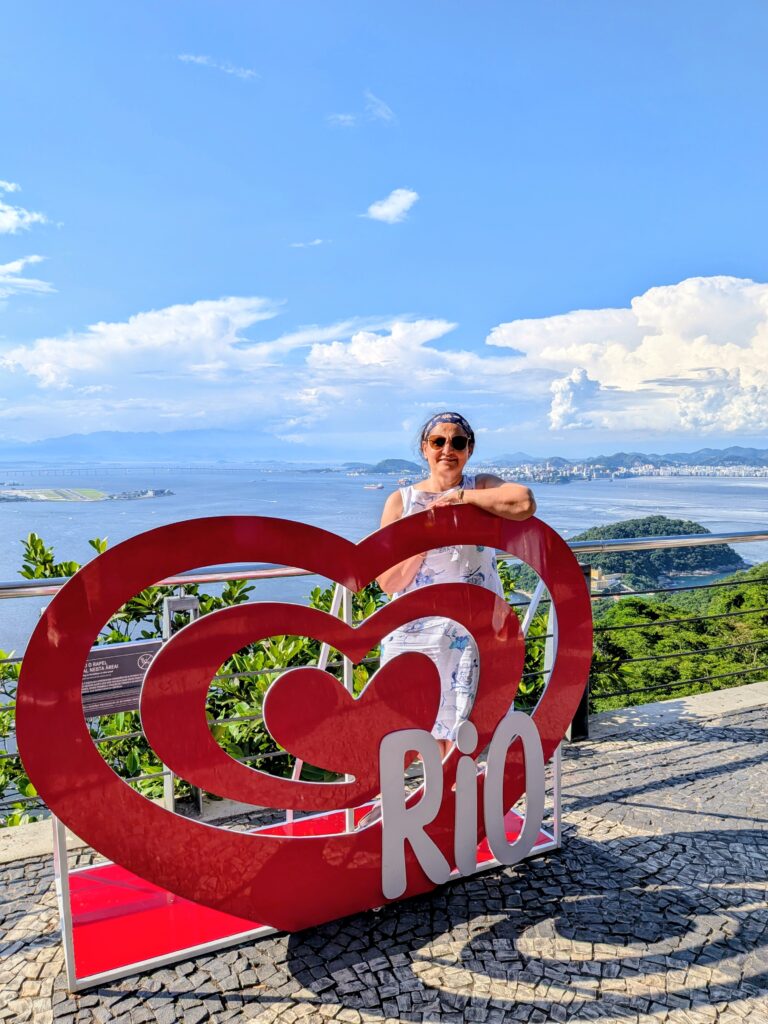
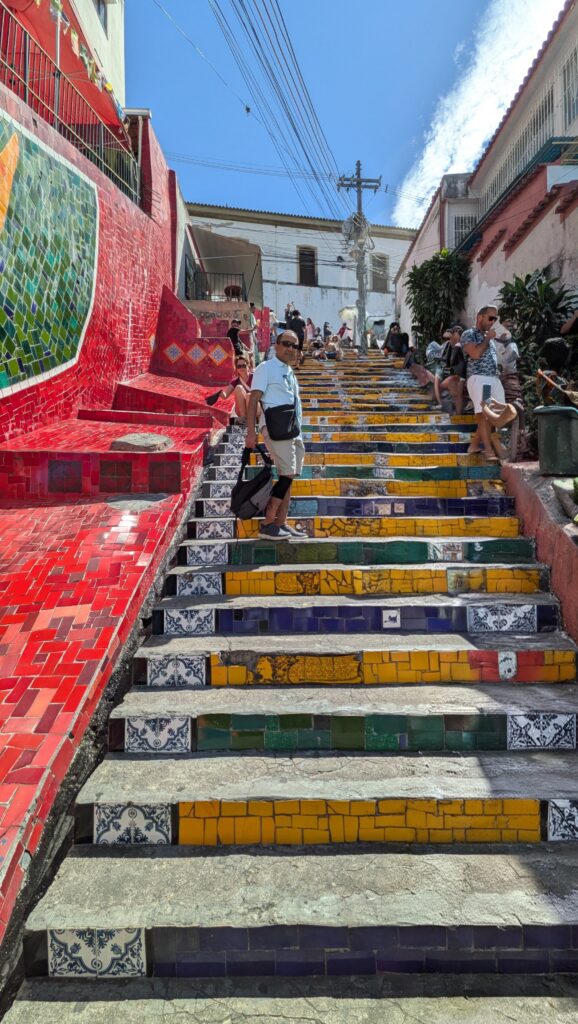
Our original plan was to visit Christ the Redeemer and Copacabana Beach on the first day. However, based on the weather reports, we decided to go to Sugarloaf Mountain instead, as it was supposed to be a clearer day for the sunset. We called an Uber and headed to Escadaria Selarón (the Lapa Steps). This is a vibrant place. It was Saturday on an Easter weekend, so there were a lot of people, and the place was hopping. It had a great young energy with vendors everywhere; you just feel upbeat walking through it.
But it was hot and humid. With 84-degree temperatures and 90% humidity, you sweat like you have never sweated before—as the President would say, “nobody has seen anything like this.” Going up the stairs is certainly good exercise. After a couple of hours, we took an Uber to Sugarloaf Mountain. The air-conditioned car felt so good that I asked my wife if we should just ask the driver to keep going in circles for 30 minutes.
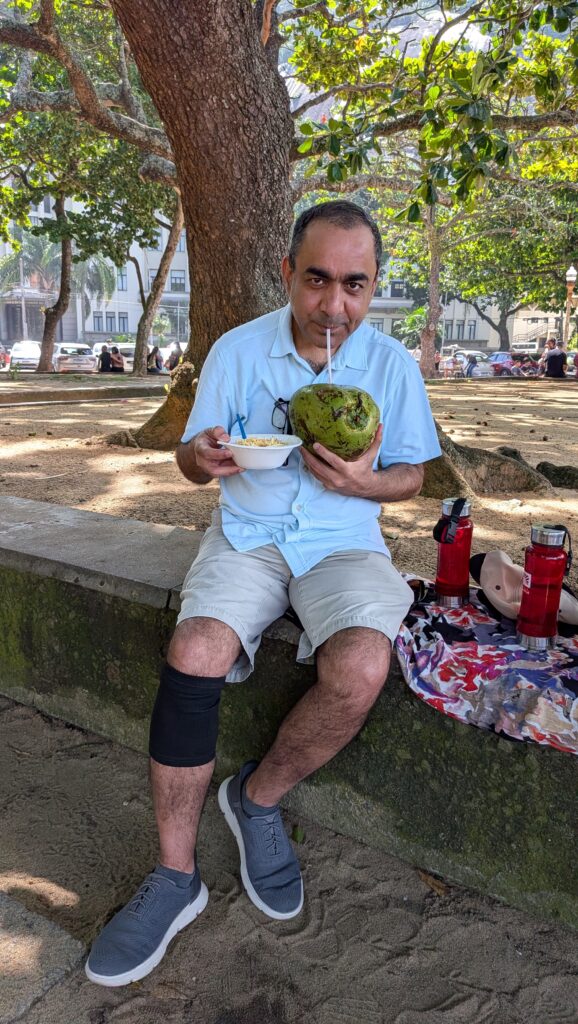
We had purchased timed-entry tickets for Sugarloaf Mountain in advance. Once we arrived, we were told we were about an hour too early, so we decided to walk along the beach 100 feet away. The beach had nice shade from large trees, and the breeze was a welcome change from the heat. Again, due to the Easter weekend, the beach was full of people and vendors. We saw many coconut vendors; my wife loves coconut water, so whenever she sees it, we must stop.
I also saw vendors selling boiled corn. They take the boiled corn, cut off the kernels, season them with salt, and sprinkle them with potato crisps (for those of you of Indian origin, it was like potato “sev”). This was a really nice snack.
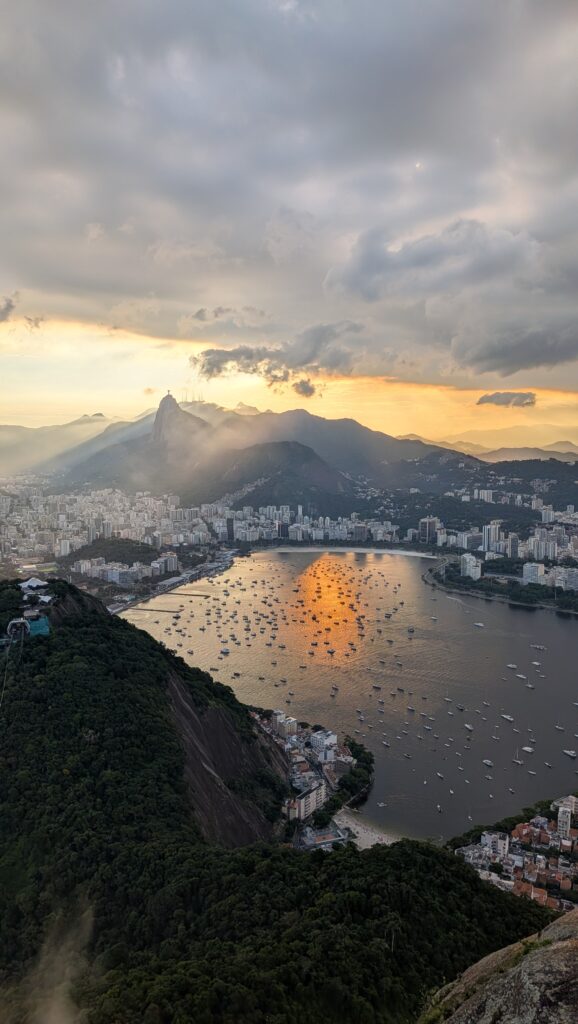
Soon, it was time to head to Sugarloaf Mountain. The lines were long. Even with timed entry (we chose the 3:00 PM slot, figuring the lines would get us to the top by 5:00 PM for the sunset), it felt like being in line at Disneyland. It took about 35 minutes for our turn on the cable car. The Sugarloaf cable car has two stops. The first stop is at Urca Mountain, which they have turned into a nice, touristy mid-stop. The views from there are incredible; you can see most of Rio.
We stopped for some popcorn and ice cream, walked around, took lots of pictures, and then continued to the top of Sugarloaf Mountain. The lines for the cable car were never-ending, but we finally reached the peak. We walked around and took more pictures—the views from here are even better, if you can imagine. We were tired and the heat was getting to us, but they had a forest at the top that felt heavenly. We relaxed there for half an hour before wandering back toward the shops.
I knew of a pizzeria at the top that was supposed to be very good, so we decided to have an early dinner while waiting for the sunset. The pizza was either amazing, or we were just that hungry—or both. We finished a whole pizza between the two of us. After dinner, we walked back to the sunset point, took a few more pictures, and started our way back down. Again, there were long lines for the cable car. Once we were down, it seemed everyone wanted an Uber at the same time, so getting one took a while. The area gets pitch dark as soon as the sun sets. We called it a night once we got back to the hotel.
The next day, we planned to visit Mirante Dona Marta for the sunrise, which was less than a mile from our hotel. However, due to recent rains, the observation deck had become unstable and was closed to tourists. We had to skip the sunrise, which meant we woke up late. After breakfast, we were ready to go to Christ the Redeemer.
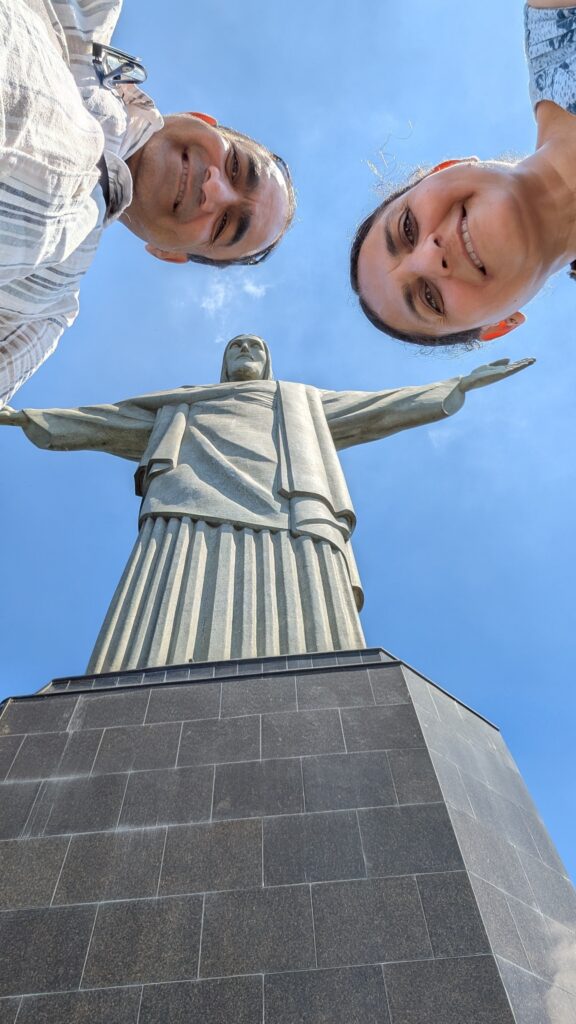
There are two ways to visit this monument: you can go to the base and buy a shuttle ticket, or you can take the train. We decided on the train and had purchased timed-entry tickets ahead of time. The station was less than a mile’s walk downhill from our hotel, so we decided to walk. The station was small and cute. There were lines, but the area was covered, making it tolerable. Soon, we boarded the single-track, narrow-gauge train that runs up the mountain. It reminded me of the “Little Engine That Could” story.
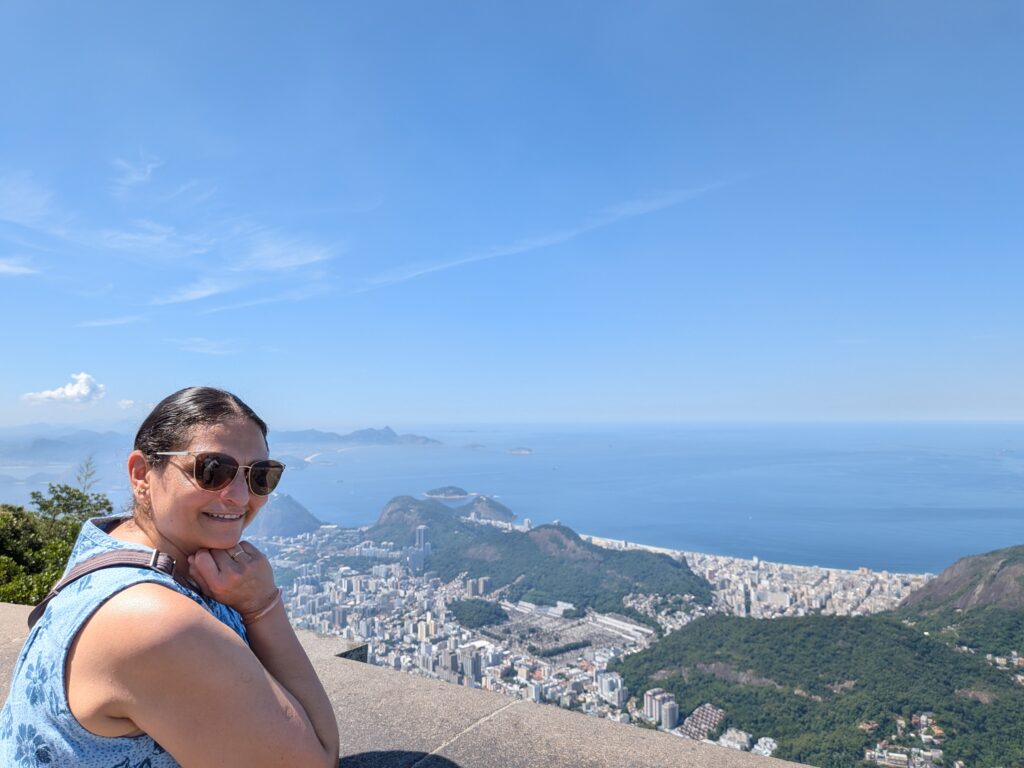
It is a good 25-to-30-minute train ride to the monument. Once off the train, there are quite a few steps to reach the statue. They have an elevator and escalator combination available, but we decided to walk. Along the way, you see incredible views. Rio is a city on the ocean, but it is also very hilly, and the views from these hills out to the water are breathtaking. We took plenty of pictures and soaked it all in. After about half an hour, we headed back down for another train ride to the station.
We wanted to go to Copacabana Beach from the train station. Uber showed a 20-to-30-minute wait, so we took a taxi instead. Since it was Sunday, I wanted to exchange some currency, but everything was closed. Other than restaurants, nothing was open—and even some of those were shut.
One thing I noticed in Brazil is that they have a good work-life balance. Most shops (except for restaurants and bars) close at 5:00 PM. For example, I had arranged for a driver on Monday to go to the Tijuca National Park. He called the day before and said, “My son is with me, so I will not come.” I respected that, and he did provide the contact info for a friend who could take us.
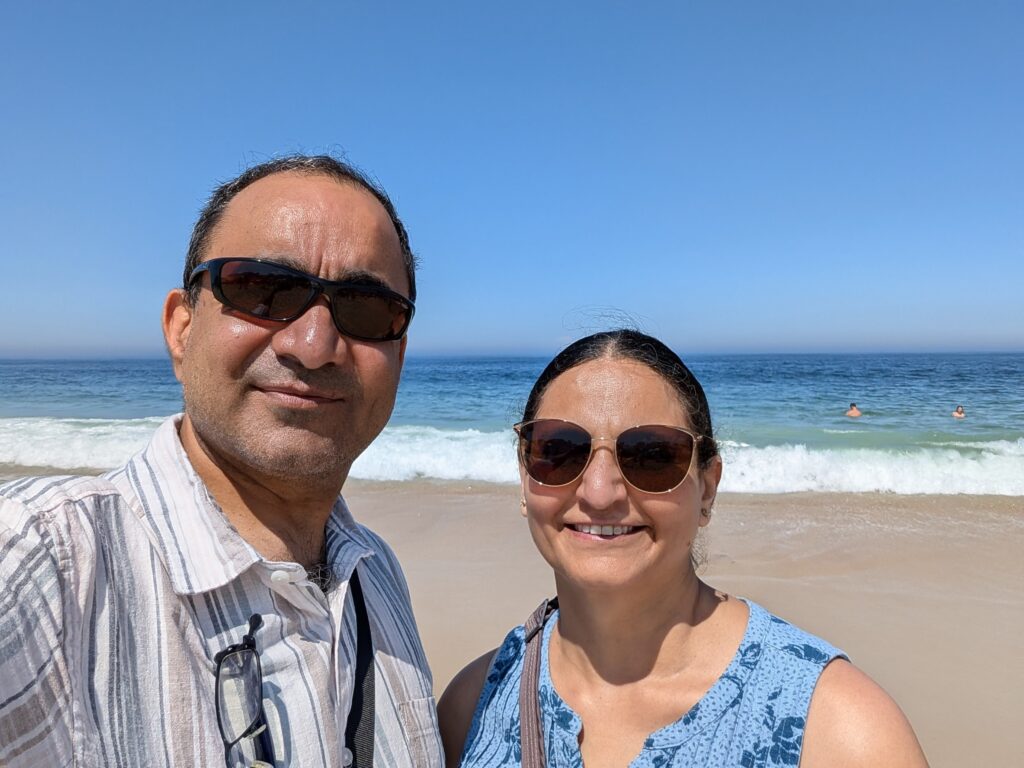
Anyway, back to the world-famous Copacabana Beach. The sand was fine and the water temperature was perfect. We spent some time there before looking for a place to eat. Because it was Easter Sunday, there were not many vegetarian options near the beach. We found a salad place that served rice, beans, and salad; it wasn’t as impressive as the pizza from the night before, but it worked.
We noticed fresh juice shops on almost every corner and decided to check one out. The juices were fresh and delicious. They also had nice pastries, so we enjoyed a large slice of Black Forest cake with fresh-squeezed juice. Afterward, we called an Uber to head back to the hotel.
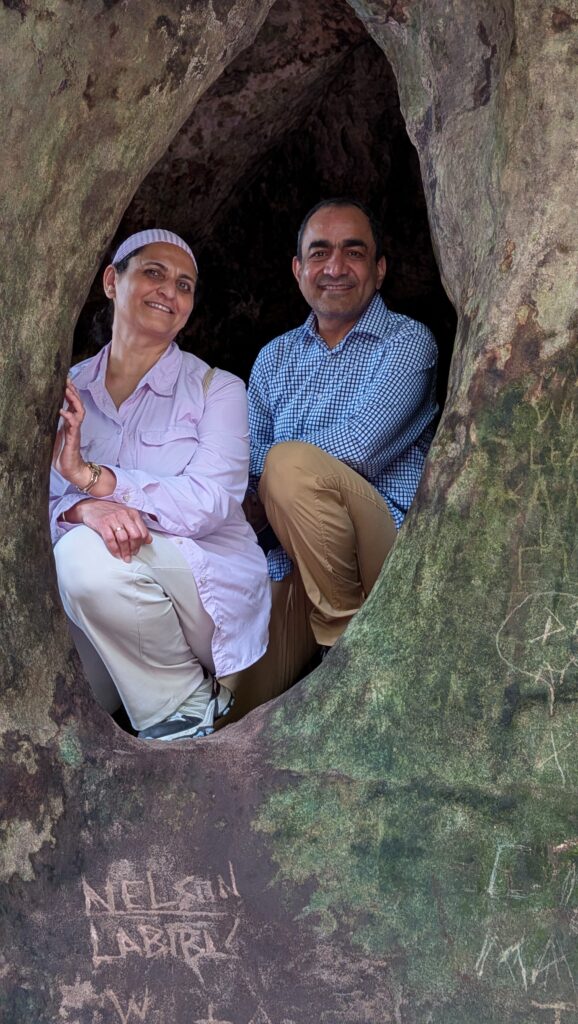
The next morning, our driver picked us up for Tijuca National Park around 10:00 AM. He arrived right on time. Our first stop was Vista Chinesa, a roadside viewpoint. While the views were nice, it wasn’t the main attraction. Next was Cascatinha Taunay, a wonderful waterfall. The view and the sound of the water were very refreshing. After about 15 minutes, we continued on a windy road to Gruta dos Morcegos (the Bat Cave). It is quite a hike to get there, and we were definitely out of breath. As we got closer, my wife spotted bat droppings. The cave was large—about 300 feet long. After admiring it, we hiked back down to Cascata Da Baronesa, which was just a few hundred steps away. It’s a nice waterfall you can swim in, and we had fun getting wet in the sweltering heat.
We returned to the hotel around 2:00 PM and started packing, as we were leaving the next morning. For dinner, we wanted something familiar and found a Mexican restaurant called Restaurante Guacamole. It’s a chain, but the food was delicious and had good vegetarian options. We really enjoyed the meal before heading back to the hotel.
The next morning, we were off to Iguazu Falls. I arranged for the same driver who picked us up from the airport to take us back. It was early, so there was no traffic. We had a layover in São Paulo before flying to Iguazu Falls. While in São Paulo, I discovered something new: while wandering the lounge, I saw a round, puffy snack. A local told me it was a cheese bread called Pão de Queijo, a Brazilian specialty. It was a great find!
We arrived at Iguazu Falls around 1:00 PM and took a 20-minute taxi to our hotel. It was a local Brazilian chain with friendly service, great rooms, and a luxury feel. We settled in and then quickly headed back out. Iguazu Falls is at the intersection of Brazil, Argentina, and Paraguay. I had been to Argentina before but wanted to visit Paraguay while I had the chance. There is a bridge between Brazil and Paraguay called the Friendship Bridge. We took an Uber to the bridge and decided to walk across rather than take a taxi.
After the Brazilian immigration formalities, it was a nice, leisurely walk. We noticed many people crossing without stopping, but we didn’t want to take any chances. We completed the immigration process for Paraguay and entered Ciudad del Este. This city is known for shopping. It apparently started with Chinese counterfeit goods but has grown into the legitimate Chinese goods capital of South America. They have massive Chinese malls—the largest is almost a million square feet. These malls even provide free shuttles to pick up tourists from the Brazilian side. I never would have thought I’d find massive Chinese malls halfway around the world in a landlocked area where the per capita income is less than $7,000 a year.
Chinese Goods
As we were walking back to Brazil across the bridge, a rainstorm suddenly popped up. It was heavy rain with high winds, and we got soaked! It lasted about 30 minutes and then disappeared as quickly as it had arrived. Once we were back at the hotel and dried off, we went to dinner. I also exchanged some currency (most places in Brazil take credit cards, but my guide for the Amazon trip required cash). We found a highly-rated Italian restaurant within walking distance called Pastificio Pasta Mia. Communication was a bit challenging, even with a translation app, but the meal was incredible. The salad was fresh, and the cheese, pasta, and bread were all homemade. It was a wonderful meal.
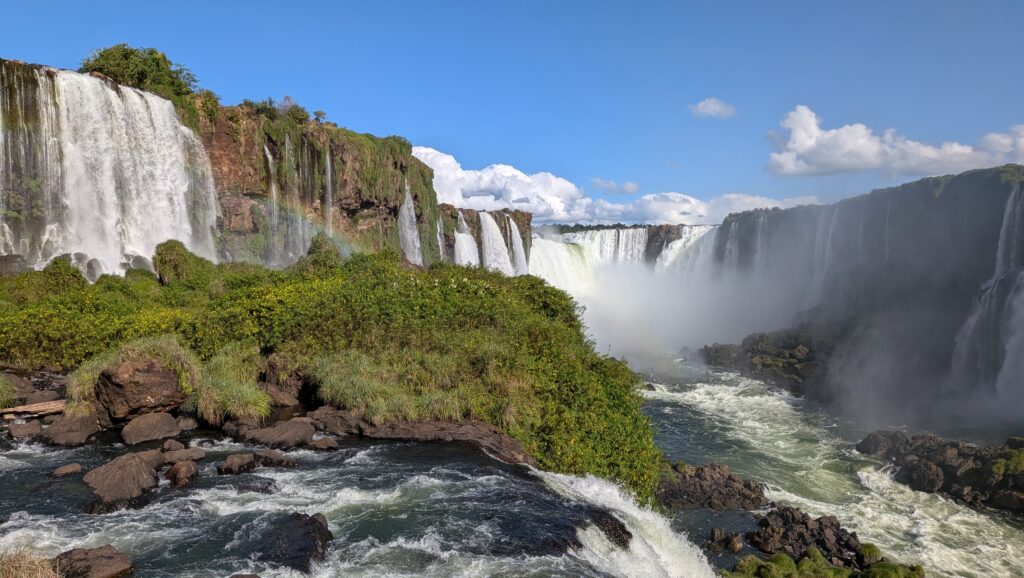
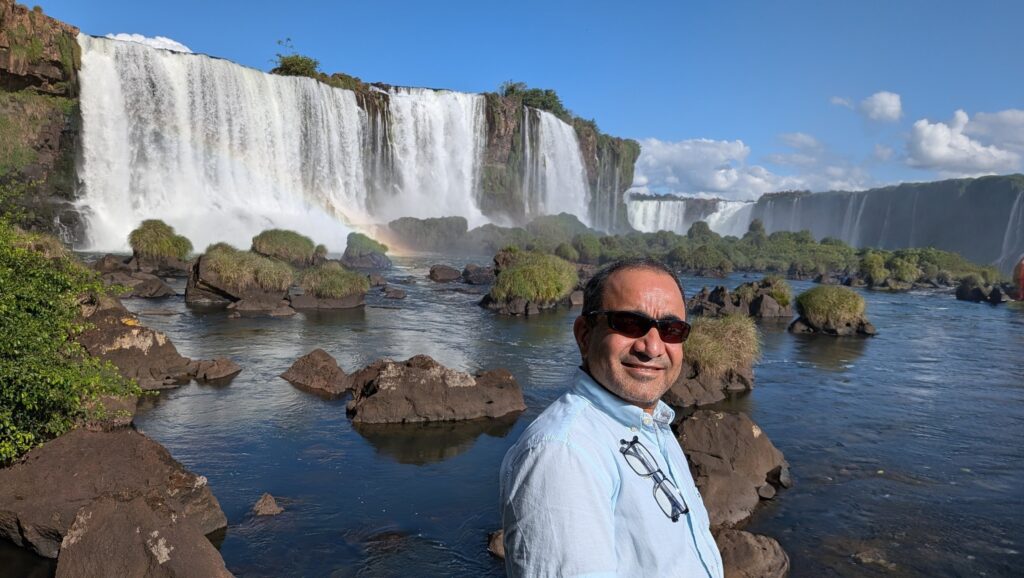
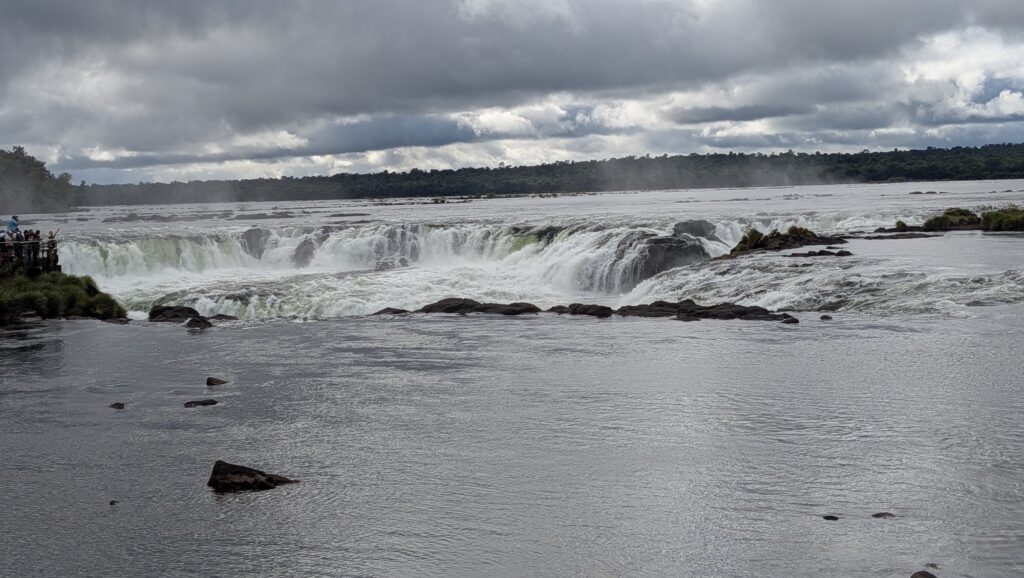
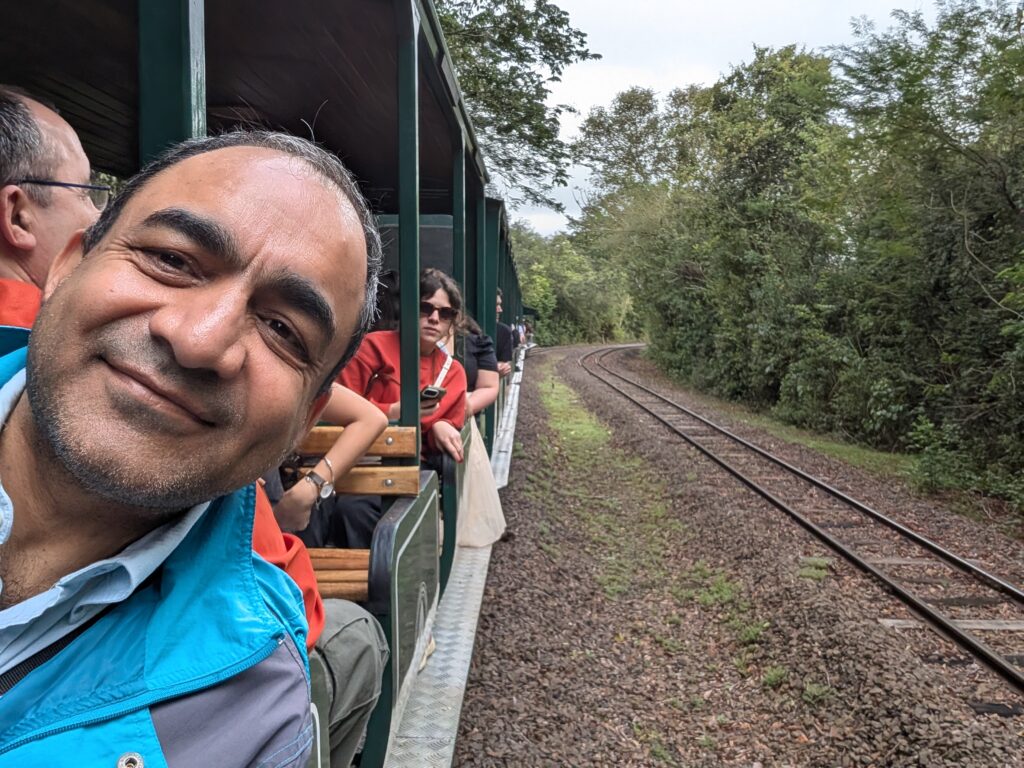
The next morning, we went to see Iguazu Falls. I had originally arranged for a private guide, but he canceled at the last minute for a doctor’s appointment. I booked a group tour instead. Our guide picked us up after breakfast, and it took about an hour to drive to the Argentine side of the falls. After going through border formalities, we headed straight for the “Devil’s Throat.” We had purchased tickets online the night before to avoid the morning lines. The Argentine side is very well-structured and uses a train to move visitors. They have built walkways that go right to the edge of the falls. The river looks so calm and slow just before the drop, and then—boom! The roaring sound is incredible. No matter your state of mind, it washes your worries away. Along the walkway, we even saw a bunch of raccoons “auditioning” for the tourists.
After enjoying the Devil’s Throat, we headed to the Upper Circuit, which is a mile-long walk offering a different angle of the falls. The views are so beautiful that words don’t do them justice. The entire system is 2.7 km long. After a few hours, we headed back to the Brazilian side. After the border formalities, we arrived just after noon. They have efficient kiosks for tickets and several restaurants, so we had lunch before exploring. On the Brazilian side, you drive to the trailhead. The trail is about two miles long with constant views of the falls. As you get closer, a boardwalk takes you almost inside the falls; you can really feel the spray. It’s a majestic view, and from the Brazilian side, you can see the entire system because you are at the bottom. We spent a few hours there before returning to town around 6:00 PM. It was a long day, but well worth it.
The next morning, we flew to Manaus, the largest city in the Amazon jungle, with another stopover in São Paulo. Our flight was delayed due to air traffic control issues that closed the São Paulo airport for a couple of hours. Once we arrived in Manaus, we looked for a cab and accidentally ended up in an unofficial taxi. We hit rush hour traffic—the first time we encountered heavy traffic in Brazil—and finally reached the hotel after 6:00 PM. We were tired, so we ate at the hotel and went to bed.
I usually don’t recommend individual tour guides, but I have to make an exception for Luis Blanca of Tourismo Brasil. I had reached out to him to arrange our Manaus adventures. He speaks fluent English, is very flexible, and works hard to customize the trip to your interests. He really listens and adjusts based on your reactions, which is a rare skill. You can reach him on WhatsApp at +55 92 98539 6150. We also got to meet his adorable son.
The Best Tour Guide in Manaus
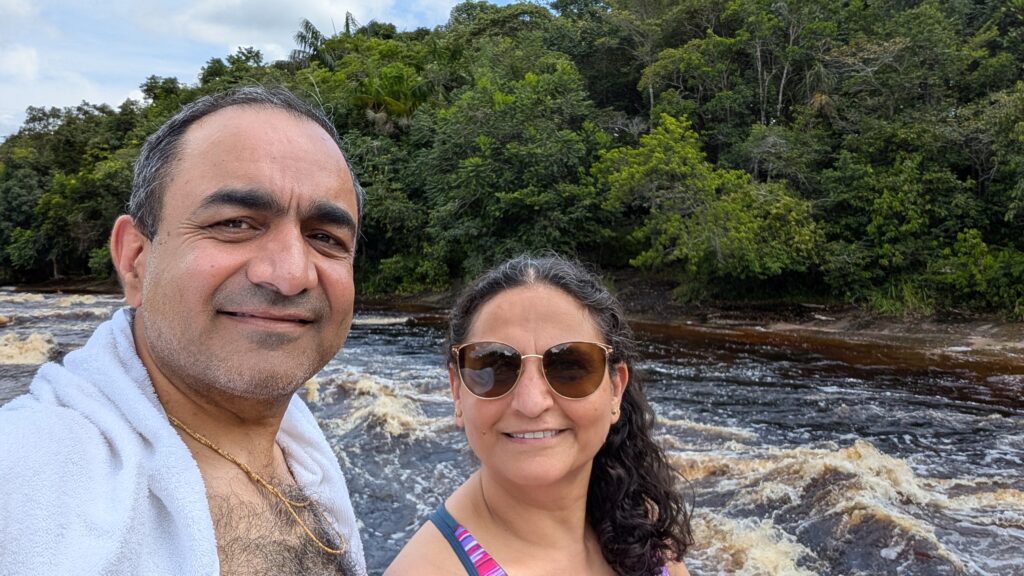
The next morning, the driver Luis arranged was ready at 8:00 AM. We visited Presidente Figueiredo, about two hours north of Manaus. I was impressed by the infrastructure in the middle of the jungle—the roads were smooth with no potholes. Our first stop was Iracema Falls, located on private property. There are caves near the viewpoint, and the water is a muddy color due to the minerals it picks up. My wife took a plunge, but I just got my feet wet. Next, we visited Lagoa Cristalina, a freshwater lagoon where we enjoyed a swim in the hot weather. On the way back, we stopped at the Vermelho River (Red River), where the water is actually red due to the minerals. We also visited Urubui Park, a municipal park with man-made rapids. However, it was too hot and the water level was too low for tubing, so we skipped that and had lunch nearby. The buffet had fresh salad, rice, beans, and fries—not bad for the middle of nowhere! Our last stop was the Asframa Waterfall. This is a great spot to swim; the force of the water feels like a massage. It is a serene experience. We had so much fun there before heading back to Manaus, arriving at the hotel by 5:00 PM.
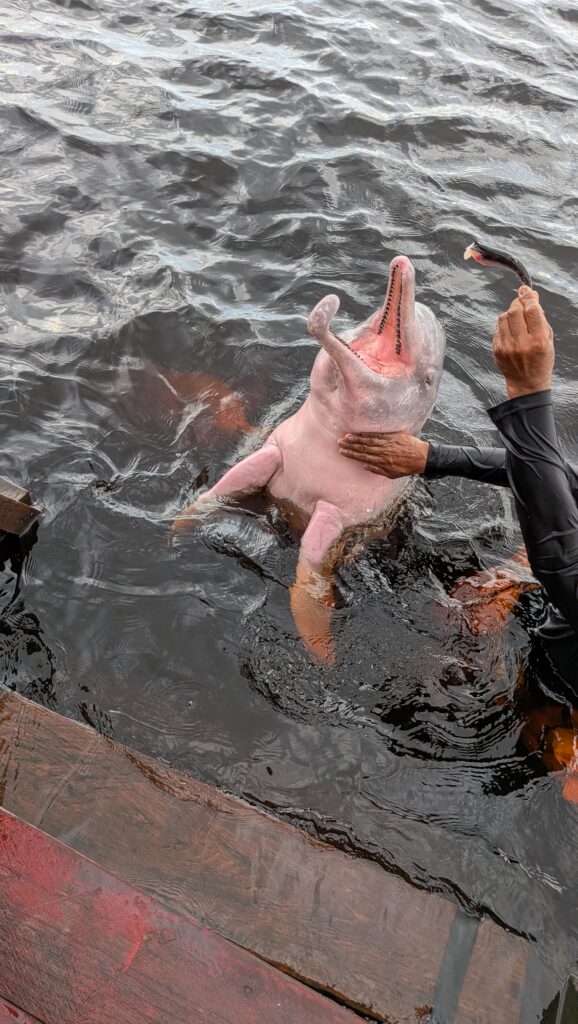
The next morning, Luis arranged an Amazon Boat Safari. Since I tend to get motion sickness on small boats, he put us on a larger regional boat with a capacity of about 80 people. We started on the Rio Negro, which is about 5 km wide at the Manaus harbor. In the wet season, it can get as wide as 20 km—it’s mind-boggling. Our first stop was swimming with pink freshwater dolphins. They come up because they are fed fish, and tourists get to swim with them. I’m not a swimmer, so I stayed dry, but my wife loved it.
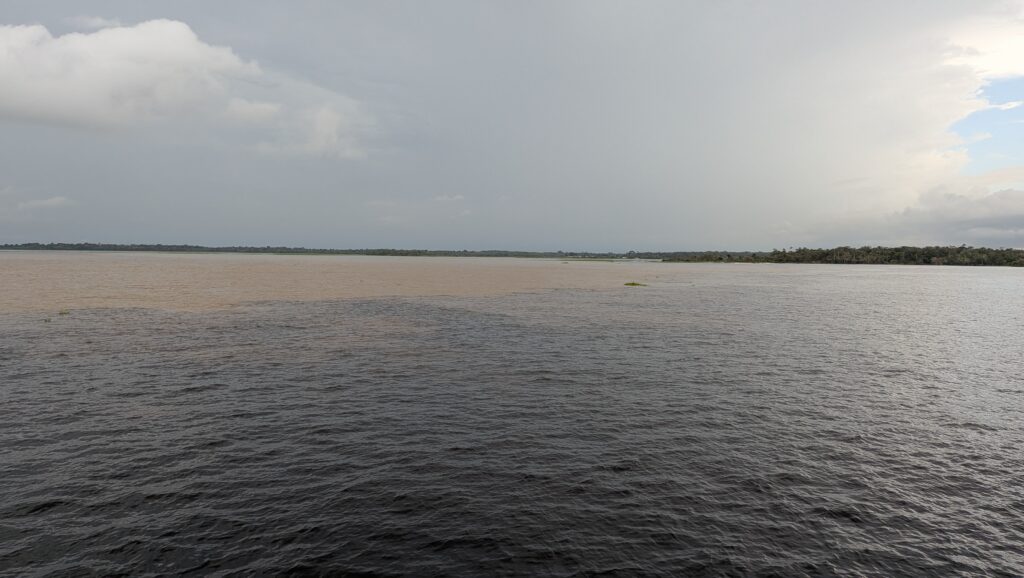
Next, we went to the “Meeting of the Waters,” where the Rio Negro meets the Amazon River. Because the rivers come from different geographies, carry different minerals, and have a 10-degree temperature difference, they create a stark color divide. It’s very unique. We then saw a floating dock to view a prehistoric fish called the Arapaima Gigas, which supposedly dates back to the Jurassic era. We also visited a native village to watch a traditional dance. Our final stop was a restaurant for lunch, which had some vegetarian options.
After lunch, the guide took the group for a hike to a water lily pond, but since it was 98 degrees, we decided the hike wasn’t worth the heat. We were back at the port by 3:00 PM, where Luis and his son were waiting. We checked out the local market, bought some souvenirs, and had a fresh acai drink. The Amazon is known for acai, and it’s as fresh as it gets there.
That was the end of our trip. We went to the hotel and got ready for our early morning flight home. All in all, it was wonderful. We met amazing people, visited places we’ve always wanted to see, and made new friends. We weren’t even tired at the end of the trip, which is unusual! When was the last time you came home from a trip thinking you’d made new friends? Please share your experiences and comments. Until next time!
Nicely detailed description of your trip. With lots of practical tips. Need to read in detail, again. How many days did you spend on this trip including days of travel?
How many days were you in Peru for?
Thank you! We spent 10 days on this trip. Peru was a long time ago for 8 or so days.
Beautiful pictures, Nelson & Labibi! Are there good veggie options in Brazil, or is it the same meat dominant menu like the rest of the South America?
Same as rest of South America. Manaus was a tough place to find good vegetarian. They do have rice and beans in their diet. We ended up finding decent vegetarian food in Rio and Iguazu Falls though.
Very nice detail description of your Brazil trip . Pictures are nice . We also planning to go there so some of you detail helpful for us .
Thanks for sharing
Thank you! Glad you found it helpful…
Detailed information with useful practical tips.pics are very nice
Very informative, useful tips,nice pics,all the best for century!
Thank you!
Very informative, useful tips,nice pics,all the best for century!